I Killed Before and Ill Kill Again
When Jim Curtis institute out he had lesions on his spinal cord, at age 22, he wanted to die. "Information technology was unknown how they started, but I very rapidly became ill and soon had trouble walking," the former president and current board director for Remedy Wellness Media recalls. While doctors couldn't diagnose Curtis's exact illness, he had all the symptoms of a spinal cord injury, including hurting, headaches, muscle spasticity, and paralysis, in addition to a chronic limp.
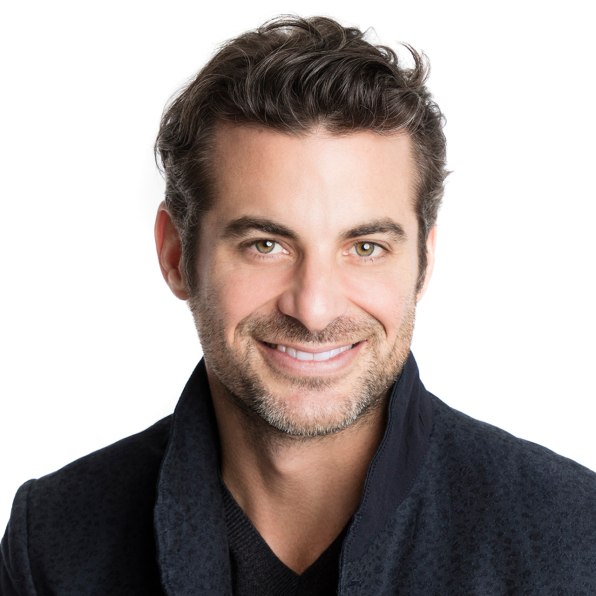
But he didn't die. Instead, Curtis rehabilitated as best he could, pushing himself to finish college and somewhen snagging a task as a trader on Wall Street. After two years on the floor of the American Stock Substitution, he switched gears and moved through several roles in digital wellness media, including at WebMD, before joining Remedy Health. All the while he was helping build Remedy Health'due south business into a platform whose content now reaches over 200 million users a year, Curtis hid his chronic illness from everyone he worked with every single day. Until one serial of conversations changed everything.
Fast Company recently caught up with Curtis to hear almost those experiences. Hither's what he's learned nearly coping with chronic illness while building a career. His business relationship has been condensed and lightly edited for clarity.
"Virtually of the time I was lying"
My disease was telling me something almost the perception of who I was, [which to me] was this macho guy; I was an athlete and I had a program to piece of work on Wall Street, and so I did it. It couldn't have been a worse selection. I had to stand up up in a crowd all day. It was super high-stress, which is inflammatory and devastating for a condition like mine. It increased symptoms of fatigue and pain, and it brought on new ones similar IBS [irritable bowel syndrome] and other things I couldn't control.
Often I would never broach information technology because I was walking with a limp and I didn't want to get into the 'why.' Then for most of the time I lied. I fabricated up a story because I wasn't vulnerable plenty to tell this story. So I said I'd been in an blow–oftentimes it was motorcycle accident–because that fit perfectly, that's kinda cool and that's tough enough.
After ii years, when I realized that the Wall Street chore just wasn't for me, I went to piece of work for a company called OnHealth. I can remember walking/limping into this first interview thinking, "I wonder how is this going to go over." It was then different–a loft with orangish walls in SoHo. There was a resting room with beanbag chairs. I had my own desk-bound to sit at, and it was placidity–wow! Wall Street comes with a lot of macho ego, like "I am fighting my mode through and succeeding," so when I got to a much more gentle surroundings I fought it a lilliputian. I [thought], this isn't tough or cool, just I quickly realized it was better for me.
Still, I hid my condition and information technology was actually hard for me. Upwards until ten years ago, I had IBS, and accidents happened a lot. As a salesperson on the road a lot, I would accept to walk through major airports literally for a couple miles; I didn't want to wait for a wheelchair and trip and fall and be so sweaty. I was doing that and not talking nearly it and pushing through. When something terrible happened–which it did–I would become into disaster mode or go habitation and take care of it and get back to work for some other twenty-four hours. I was definitely depressed. You don't realize what a toll that takes. [Since] I was in sales, I was entertaining [and consumed] a lot of bad food and alcohol and was easily 50 pounds overweight.
I was more than charming than I am now [laughs]. "Mannerly" became a give-and-take I hated because it is so faux. I learned apace [to exist] charming to manipulate people into non asking what was wrong with me, and considering I was happy–seemingly–and the best at what I was doing, no one really questioned me. I don't think I always allow an opening happen for someone to say, "Hey, what's wrong? Can I assist you?" Fifty-fifty at these health companies, they treated me similar anybody else, which is what I wanted. I don't think the culture was incorrect. If I [had] reached out for more support, I could have gotten it.
"Run across the human being side of everything, including yourself"
It wasn't until I got to Remedy Health [that things started to change]. The CEO, Mike Cunnion, was the first to commencement to scissure me as a human dealing with issues. I had worked with him at WebMD and nosotros were friends. He recruited me and he would always inquire me, "How are y'all feeling? How's your health?" He even went as far every bit to go into the mental aspect. He said to me, "Yous're doing corking and you're an amazing person. Why do you detest yourself?" He was relentless with that.
He always supported my all-time attributes. He had a real kindness, and he likes to develop people. He set me upwardly with my first big speaking engagement, which immune me to share the truth of my struggle to 700 people in the industry, many [of whom] I worked with. That was half dozen years agone.
Everything changed after that. Nosotros started new products that told stories well-nigh patients, a series of video documentaries about people who overcame and triumphed despite their issues. Everyone understood what I was going through, and they shared what they were going through. It could be powerful. I would help salespeople feel comfortable enough and vulnerable enough to practise it, also. I told them, "We tin can't sell stories nigh adversity if no one'due south willing to talk well-nigh their own arduousness. If you are not willing to connect and run across the homo side of everything, including yourself in that way, then we can't exist authentic in what we are doing and selling."
I don't think in that location is i affair you lot tin can do to become people to open up upwardly and be vulnerable. You lot have to create an environs of acceptance and openness and no pressure. It'due south a real environment of support. If someone has mental health issues and they don't want to talk virtually it, and then don't talk well-nigh it. We support them anyway. It's more of a "Tell u.s.a. what you lot demand" and less of "What's happening to you?"–not pushy similar, "We will become you the best therapist." It'south a not-judgmental kindness that is fostering basic human qualities, and not, "This is the way you deal with something." [At Remedy Health,] we become through grooming for edifice emotional IQ.
If you share something and people don't take you lot for it, it's not the correct identify for you. Judgment doesn't carp you lot when you feel adequate. It's when y'all are not loving yourself that you are not your own all-time support, and you terminate up sympathizing with the person who judged you.
Source: https://www.fastcompany.com/40583072/hiding-my-chronic-illness-from-my-coworkers-almost-killed-me
0 Response to "I Killed Before and Ill Kill Again"
Post a Comment